Low water pressure can turn an ordinary morning into a frustrating wait beside the sink. A weak stream may barely rinse soap from a cup or fill a kettle. For homeowners searching “How to increase water pressure in faucets,” the right solution begins with diagnosis, not random replacement.
Richard Trethewey, a respected plumbing expert associated with This Old House, has said, “Water pressure is only as good as the weakest point in the system.” This practical idea matters in Chinese homes, apartments, and commercial kitchens. A clogged aerator, partly closed shutoff valve, damaged cartridge, or narrow supply hose can restrict flow. In older buildings, mineral deposits may create a rough white crust inside the faucet screen. That tiny blockage can change the entire stream.
Begin with a simple comparison. Test several faucets at different times. Then remove the aerator and rinse it under clean water. Check the angle stop beneath the basin. It should open fully, but never force a stuck valve. A pressure gauge can reveal whether the problem affects one faucet or the whole property. Many household systems operate near 40–60 psi, although local conditions vary.
A booster pump may help when building pressure remains consistently low. It is not a cure for leaking pipes or municipal supply limits. That distinction is easy to miss. Even experienced homeowners can misread symptoms. For safety and dependable results, consult a licensed plumber before changing pressure regulators or hidden pipework. The best fix is usually small, measurable, and less dramatic than expected.
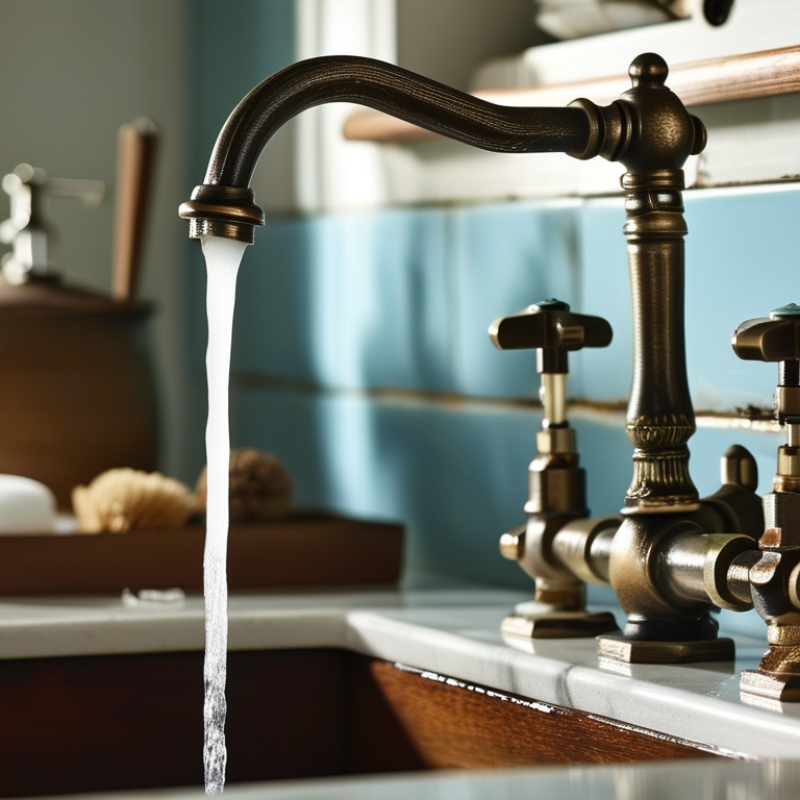
Low faucet water pressure often starts with a simple restriction, not a broken faucet. Mineral deposits can clog the aerator, creating a thin, uneven stream. Unscrew it carefully and inspect the small screen under a bright light. Soak it in diluted vinegar, then rinse every opening with clean water. A quick rinse is not always enough.
Partly closed shutoff valves also limit flow. Check the valve below the sink and turn it gently until fully open. Never force an old valve, because its internal seal may fail. If only the hot side is weak, inspect the hot supply hose and faucet cartridge. Sediment can collect there after plumbing repairs or long periods without use. I have seen a clean aerator improve flow, while the real restriction remained inside the cartridge.
When every faucet performs poorly, the cause may be a pressure regulator, clogged main filter, or low municipal supply pressure. Compare the kitchen faucet with a nearby outdoor tap, if available. A basic pressure gauge can provide useful evidence, but readings may change during peak demand. Hidden leaks deserve attention too; damp cabinet floors, soft drywall, or a constantly moving water meter are warning signs. Some diagnoses are easy to miss. If pressure suddenly drops or pipes make noise, a licensed plumber should test the system before parts are replaced unnecessarily.
| Common Cause | Typical Signs | How to Check It | Recommended Action | Typical Improvement | Safety and Maintenance Notes |
|---|---|---|---|---|---|
| Clogged faucet aerator | Low flow at one faucet, uneven spray, or water that splashes. | Unscrew the aerator and compare the flow with the aerator removed. Inspect the screen for mineral deposits or sediment. | Soak removable parts in white vinegar for several hours, brush away deposits, rinse thoroughly, and reinstall. Replace damaged screens. | Often noticeable at the affected faucet | Do not use sharp tools that may damage the mesh. Check the aerator periodically in hard-water areas. |
| Partly closed shutoff valve | Reduced flow from one fixture after plumbing work, cleaning, or remodeling. | Locate the hot and cold supply valves under the sink and turn each valve counterclockwise until fully open, without forcing it. | Open the valves gradually and confirm that the flexible supply lines are not kinked. | Usually restores the original flow | A valve that leaks, binds, or will not turn should be serviced rather than forced. |
| Blocked or kinked supply hose | Low flow from one side of a faucet or a sudden reduction after cabinet items were moved. | Inspect the hoses beneath the sink for sharp bends, crushing, corrosion, or visible debris. | Remove obstructions and gently straighten the hose. Replace a damaged hose using the correct connection size. | Moderate to substantial at one fixture | Close the shutoff valves before disconnecting any hose and protect the cabinet from residual water. |
| Clogged faucet cartridge or valve | Low flow, difficult handle movement, or a difference between hot and cold water. | Compare hot and cold flow and inspect the cartridge or valve after shutting off the water supply. | Clean the cartridge if permitted by the faucet design; replace worn or blocked internal parts when cleaning does not help. | Can restore normal fixture flow | Take a photo of the assembly before removal and keep small parts in order during reassembly. |
| Sediment in the building supply line | Several fixtures have reduced flow, especially after water-main work or a plumbing repair. | Compare flow at multiple faucets and check whether the problem began after a supply interruption or pipe work. | Flush the affected lines according to local plumbing guidance and clean fixture screens. A professional may need to inspect the service line. | Varies by the amount and location of sediment | Do not remove a utility meter or tamper with public-side equipment. Contact the water provider when appropriate. |
| Corroded or undersized plumbing pipes | Persistent low flow at multiple fixtures, rusty water, or a gradual decline over many years. | Compare pressure and flow at different locations and inspect accessible piping for corrosion or restricted internal passages. | Have a licensed plumber assess the pipe material, internal condition, and whether targeted replacement or repiping is suitable. | Potentially significant after repair | Pipe replacement is a plumbing project; avoid opening walls or altering supply lines without proper assessment. |
| Pressure-reducing valve set too low | Low pressure throughout the property, often affecting several fixtures at the same time. | Measure static pressure with a screw-on pressure gauge at an accessible hose connection. A common residential range is approximately 40–60 psi. | Ask a qualified plumber to inspect and adjust or replace the pressure-reducing valve when needed. | Property-wide improvement is possible | Pressure above about 80 psi can damage plumbing and appliances; excessive pressure should be corrected with proper regulation. |
| High simultaneous demand | Pressure drops when showers, washing machines, irrigation, or multiple faucets run together. | Test the faucet alone and then repeat the test while other water-using fixtures are operating. | Reduce simultaneous use, check the supply capacity, and have a plumber evaluate the system if the drop is severe or persistent. | Temporary improvement when demand decreases | A pressure drop during peak use may indicate limited pipe capacity rather than a faucet defect. |
| Municipal supply or building-wide issue | Neighbors or multiple units experience low pressure, or the issue occurs at every fixture. | Check several fixtures and ask nearby occupants whether they have the same problem. Review local maintenance notices. | Contact the water utility, property manager, or building maintenance team. Record the time and affected fixtures. | Depends on the external supply condition | Avoid installing a booster pump before confirming that it is permitted and appropriate for the plumbing system. |
| Faulty or blocked water filter | Flow decreases after a filtration system is installed or as the filter approaches its service interval. | Check the filter indicator, installation date, bypass position, and manufacturer-specified replacement interval. | Replace the cartridge with the correct type, confirm the bypass valve is fully open, and flush the system as directed. | Usually restored at filtered outlets | Use only compatible replacement parts and inspect connections for leaks after changing the filter. |
Remove the aerator carefully. Rinse away sediment, scale, and loose grit. Soak removable parts in mild vinegar, then rinse them thoroughly. A clean aerator may not solve everything.
Inspect the cartridge, flexible hose, and stop valve on that side. A partly closed valve can imitate a damaged faucet. Do not blame the faucet too quickly.
Connect a pressure gauge to an outdoor tap or washing-machine connection. Record pressure when no water runs. Test again while another fixture operates. One reading is not enough.
About 40–60 psi is commonly treated as a practical residential range. Local requirements can differ. Confirm building specifications before adjusting any pressure regulator.
Long pipes, narrow tubing, sharp bends, clogged filters, and corroded metal pipes can increase pressure loss. Hidden leaks also deserve inspection. Look beneath sinks and around wall connections.
Turn the valve slowly counterclockwise. Never force it. An old internal seal may fail suddenly. If the valve feels stuck, stop and seek qualified plumbing assistance.
A pump may help when incoming pressure stays low throughout the home. It must match flow demand, pipe size, and electrical capacity. An undersized pump may sound noisy and deliver weak flow.
A pressure tank can reduce frequent starts. Install a required check valve and keep the inlet filter accessible. Keep electrical connections dry, especially near sinks. Small oversights matter.
Compare several faucets and record readings during quiet and peak hours. A sharp pressure change when another apartment uses water may indicate a shared supply issue. I would measure first.
Low faucet water pressure can result from clogged aerators, mineral buildup, worn cartridges, partially closed shutoff valves, or restrictions in household supply lines. Learning how to increase water pressure in faucets begins with identifying whether the problem affects one fixture or the entire home. Inspect the faucet head, cartridge, inlet screens, valves, and visible pipes for debris, leaks, or damage. Cleaning these parts carefully with suitable methods can restore normal flow without causing further wear.
If cleaning does not solve the issue, check that all supply valves are fully open and examine the main water line for restrictions. A pressure gauge can help measure incoming pressure and reveal whether professional assistance is needed. In some homes, approved pressure-boosting equipment may improve performance when the supply is consistently weak. After each adjustment, test the water flow at different faucets and monitor the system for recurring problems. Regularly cleaning aerators, checking valves, and addressing leaks can help maintain stable pressure over time.

 Zhishang Sanitary Ware