When contemplating a faucet purchase, many may wonder, "What should I check before buying a faucet?" This seemingly simple question opens the door to several crucial considerations. A faucet is not just a functional fixture; it shapes your kitchen or bathroom aesthetic and impacts daily tasks. Understanding these factors enhances your buying experience and guarantees satisfaction.
Quality matters significantly. Look for faucets with durable materials such as brass or stainless steel. These tend to last longer, resisting wear and tear while maintaining their beauty. Also, consider the faucet's design. It should complement your space while providing ease of use. Many overlook flow rate, yet it affects water efficiency and performance.
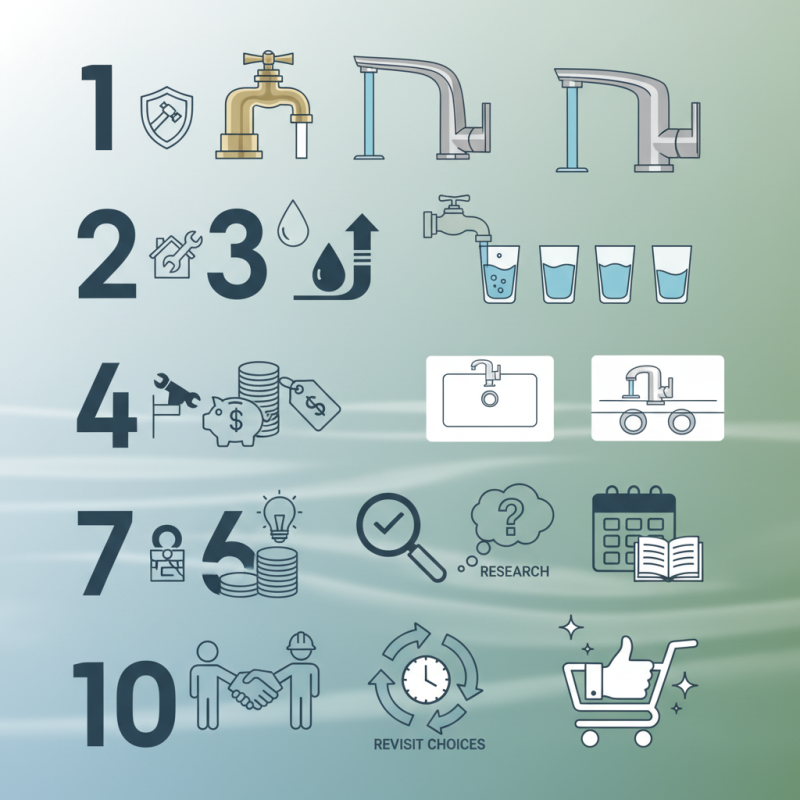
Installation can also pose challenges. Familiarize yourself with whether you need a single or double hole model. Sometimes, it’s wiser to hire professionals. Last but not least, think about your budget. It's important to balance cost and quality. Reflect on these aspects, and be open to revisiting your initial choices. Investing time in research fosters confidence in your final decision.
Choosing the right faucet material is crucial for durability and style. Brass, stainless steel, and plastic are three common options, each with unique benefits.
Brass faucets offer excellent durability and corrosion resistance, making them ideal for long-term use. Their classic look can enhance the aesthetic of any kitchen or bathroom.
Stainless steel faucets are another popular choice. They are resistant to stains, rust, and tarnishing. This makes them easy to clean and maintain. Additionally, stainless steel often comes in various finishes, allowing for customization. However, one should be cautious about lower-quality stainless steel. Cheaper options may not offer the same longevity.
Plastic faucets are lightweight and budget-friendly. They can be a practical choice for temporary setups or areas with less use. However, they may lack the strength of metal alternatives. Over time, plastic can become brittle, potentially leading to cracking. Whichever material you choose, consider the long-term implications. Select a faucet that aligns with your lifestyle and needs.
When choosing a faucet, understanding the flow rate is crucial. The flow rate, measured in gallons per minute (GPM), significantly impacts water efficiency and user experience. According to the U.S. Environmental Protection Agency (EPA), standard kitchen faucets have a flow rate of 2.2 GPM, while bathroom faucets typically range from 1.5 to 2.2 GPM. Higher flow rates can lead to increased water bills and environmental concerns.
Consider your lifestyle before making a purchase. A family with multiple members might prefer higher flow rates for efficient dishwashing and quick filling of pots. However, excessive flow can waste water. A report from the American Water Works Association suggests that reducing flow rates by just 0.5 GPM can save a household several hundred gallons per year. Such details often go unnoticed but play a vital role in sustainable living.
Evaluate how flow rate correlates with performance. A faucet with a lower GPM might still perform well if it has strong spray technology. Not all models achieve efficiency equally; some may not meet expectations. Reflect on this balance between flow rate and functionality. Often, consumers focus solely on aesthetics and overlook essential specs. Prioritizing flow rate leads to informed, responsible choices.
When considering a new faucet, compliance with water-saving standards should be a priority. Look for products that carry the EPA WaterSense certification. This label signifies that the faucet has met strict water efficiency criteria, saving up to 30% more water compared to standard models. According to the EPA, if all American homes equipped faucets with WaterSense-labeled models, the nation could save nearly 1 trillion gallons of water annually.
Investing in a WaterSense faucet can lead to significant cost savings on your water bill. For instance, such faucets typically use 1.5 gallons per minute or less, reducing waste without sacrificing performance. While comfort and design matter, functionality should never be overlooked. Test the water flow in the store to ensure it meets your expectations. Not all faucets labeled as water-efficient feel the same in use.
Here’s a tip: Always check the flow rate specifications. A lower flow rate doesn't always mean less usability. Be mindful of aerators as well; they can enhance the faucet's efficiency while maintaining a satisfying flow. Reflect on your daily water use and how a water-efficient faucet can fit seamlessly into your lifestyle. Consider consulting with local builders or contractors; they often have valuable insights on reliable products.
| Feature | Importance | Details |
|---|---|---|
| Water Saving Standards | High | Look for EPA WaterSense Certification to ensure the faucet meets water efficiency criteria. |
| Material Quality | High | Choose faucets made from durable materials like brass or stainless steel for longevity. |
| Finish Type | Medium | Select a finish that resists tarnishing and corrosion, such as chrome or matte black. |
| Ease of Installation | Medium | Check if the faucet's installation process suits your plumbing setup and requires basic tools. |
| Flow Rate | High | Ensure the flow rate is compliant with local regulations, ideally around 1.5 gallons per minute or less. |
| Warranty | Medium | Review the warranty coverage to protect against manufacturing defects and ensure durability. |
| Brand Reputation | Medium | Research customer reviews and ratings to gauge reliability and performance expectations. |
| Functionality | High | Consider features like pull-down sprayers, touchless operation, and water temperature control. |
| Size Compatibility | High | Match the faucet size with your sink and kitchen decor to achieve the best aesthetic balance. |
| Cost | High | Set a budget and compare prices to find the best value without compromising quality. |
When selecting a faucet, the handle type and ergonomics are crucial aspects to consider. Studies suggest that nearly 70% of users prefer dual-handle designs for improved control. These designs allow for precise temperature adjustments, making it easier to achieve the desired water flow. Ergonomics play a significant role, too. A well-placed lever reduces wrist strain and enhances user comfort, especially for those with limited mobility.
Another factor is the grip. Faucets with a textured handle provide a firmer hold. This feature is particularly beneficial for households with children or seniors. Industry research indicates that 65% of users report fewer slips with textured handles. It can be frustrating when a faucet feels awkward or cumbersome. Thus, selecting the right handle style ensures a smoother experience. A faucet may look stylish but could be difficult to operate if not designed with user comfort in mind.
Finally, testing the handle in-store can provide additional insights. Many people overlook this step, assuming any handle will suffice. A faucet's weight and balance can make a significant difference in daily use. Finding the right fit ensures not only functionality but also a satisfying user experience.
When selecting a faucet, the installation type is crucial.
Wall-mounted faucets are mounted on the wall above the sink. This can save space and create a modern look.
However, consider your plumbing layout. If your plumbing is in the wall, it's a great fit. If not, it could require significant renovation.
Deck-mounted faucets sit on the sink or countertop. They are more versatile and easier to install.
Most kitchens and bathrooms have this installation type. However, they require access to plumbing below the sink.
Check for sufficient space to accommodate the faucet's mounting hardware.
Consider the aesthetics as well. Wall-mounted faucets often have a minimalist appeal. Yet, they can be challenging to maintain.
Deck-mounted faucets offer a variety of styles and finishes. Keep in mind potential water spots and cleaning needs.
Each option has its pros and cons. Assess your space, plumbing, and personal preferences before making a decision.
: Common materials include brass, stainless steel, and plastic.
Brass faucets are durable and resistant to corrosion. They enhance aesthetics in kitchens and bathrooms.
Stainless steel faucets resist stains, rust, and tarnishing. They are easy to clean and maintain.
Yes, lower-quality stainless steel may not last as long. Consider quality when choosing.
Plastic faucets are lightweight and budget-friendly, ideal for temporary setups.
They can become brittle over time, leading to potential cracking.
It is mounted on the wall above the sink, saving space and providing a modern look.
Check your plumbing layout, as renovations may be needed if plumbing isn’t in the wall.
These faucets sit on the sink or countertop, allowing for easier installation.
Each type has pros and cons; evaluate your space and cleaning needs before deciding.
When considering a new faucet, it’s important to know what should I check before buying a faucet to ensure it meets your needs. Start by evaluating the material, choosing between brass, stainless steel, or plastic, as this affects both durability and aesthetics. Understanding the flow rate and its impact on performance is essential—aim for a balance that provides sufficient water flow without wasting resources.
Additionally, check for compliance with water-saving standards, such as the EPA WaterSense certification, which can help reduce water usage. Ergonomics play a crucial role as well; assess the handle type for ease of use and control. Finally, consider the installation type, whether you prefer wall-mounted or deck-mounted faucets, as this could influence functionality and installation requirements. These factors collectively ensure a well-informed purchase.

Zhishang Sanitary Ware