Why Is Brass Used in Most High Quality Faucets?

Time:2026-10-28 Author:Amelia
0%

Why is brass used in most high-quality faucets? The answer begins with performance, not appearance. Brass combines copper and zinc, creating a body that is strong, machinable, and resistant to everyday water exposure. In real installations, plumbers value its stable threads and dependable valve-seat support. These details matter when a faucet is tightened, repaired, or used thousands of times.

Brass also supports precise internal engineering. Its weight helps the faucet feel stable on a sink deck. Its workable structure allows manufacturers to create narrow passages and accurate cartridge housings. The U.S. Environmental Protection Agency’s WaterSense faucet specification limits bathroom faucet flow to 1.5 gallons per minute, compared with the older federal maximum of 2.2 gallons. That performance depends on controlled waterways, reliable aerators, and consistent manufacturing. Material choice is part of that equation.

But brass is not automatically safe or superior. Not every brass alloy has the same composition, durability, or corrosion resistance. NSF/ANSI/CAN 61 evaluates products that contact drinking water, while NSF/ANSI/CAN 372 addresses lead content. Buyers should check certification records, not trust polished finishes alone. The EPA WaterSense program and these NSF standards provide useful benchmarks, although they do not measure every long-term failure. That limitation deserves attention.

A practical inspection should examine the faucet body, cartridge, coating, connections, and warranty. Some manufacturers use brass for the main body but plastic for internal parts. That is not necessarily a defect. It may reduce weight and improve corrosion control. Still, unclear specifications create uncertainty. High quality requires more than brass; it requires verified materials, careful design, and accountable production.
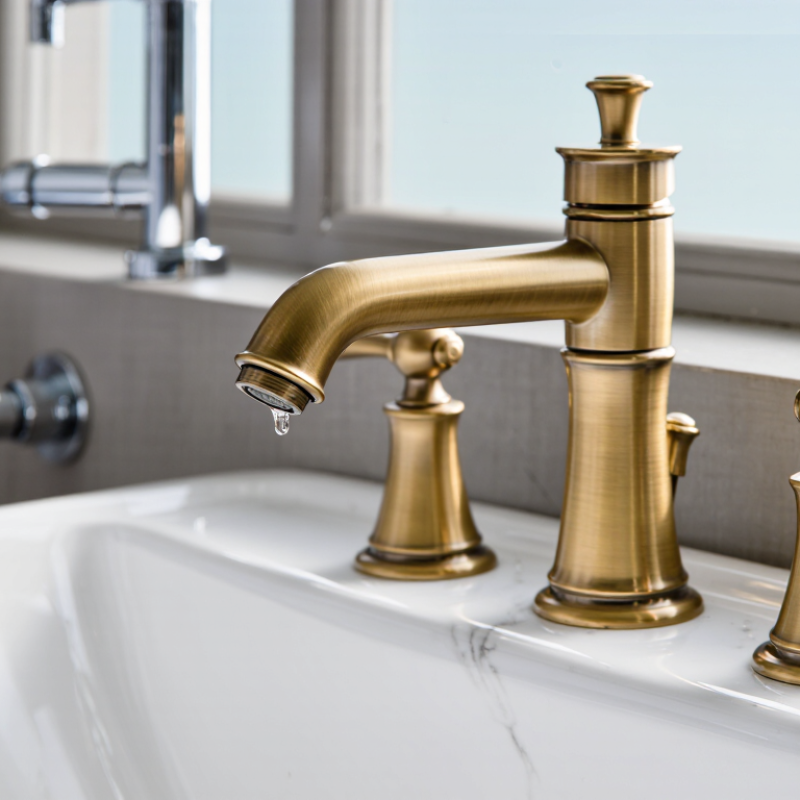
Why Is Brass Used in Most High Quality Faucets?

Brass Chemistry: About 60% Copper Builds a Strong, Corrosion-Resistant Base

Brass is widely used in high-quality faucets because its chemistry balances strength, machinability, and corrosion resistance. Copper forms the main structural base, while zinc improves hardness and casting performance. Copper Development Association alloy tables list C36000 brass at approximately 60.5–63.5% copper. This composition supports precise threads, smooth valve seats, and durable faucet bodies.

The difference is visible during installation. A well-machined brass thread feels firm, not brittle. Its surface also resists ordinary tap-water exposure better than many unprotected steels. However, brass is not immune to corrosion. The American Water Works Association notes that water chemistry, alkalinity, chloride levels, and flow conditions can influence brass degradation. Excessive zinc loss may create porous, weakened areas inside a fitting.

Material selection still requires caution. The U.S. Environmental Protection Agency identifies brass plumbing components as possible lead sources when unsuitable alloys are used. NSF/ANSI 61 testing evaluates whether plumbing materials release harmful substances into drinking water. These standards matter more than the word “brass” alone. A faucet may contain roughly 60% copper, yet perform poorly if its alloy, plating, or internal machining is inconsistent. That assumption is imperfect. Experienced installers also inspect casting quality, thread accuracy, and the water conditions at the site.

Potable-Water Safety: NSF/ANSI/CAN 372 Limits Lead to 0.25% by Weight

Why Is Brass Used in Most High Quality Faucets?

Potable-Water Safety: NSF/ANSI/CAN 372 Limits Lead to 0.25% by Weight

Brass remains popular in high-quality faucets because it is strong, machinable, and resistant to everyday plumbing stress. Its dense body supports threaded connections, valves, and moving parts. It also feels stable when installed on a sink. However, material choice alone does not prove drinking-water safety. A faucet may look excellent and still need closer review.

NSF/ANSI/CAN 372 addresses the lead content of drinking-water system components. For covered wetted components, the weighted average lead content must not exceed 0.25% by weight. This requirement applies across the applicable materials, rather than judging one small section alone. Testing and certification can help confirm that a faucet meets this threshold. Check the product documentation carefully.

The standard concerns material content, not every possible water-quality issue. It does not replace proper installation, flushing, or maintenance. Water chemistry can also affect corrosion and metal release over time. That detail is easy to overlook. In practical use, stagnant water may sit inside a faucet overnight, so flushing the tap before drinking can be sensible. Local requirements may be stricter, too. I once assumed a heavy brass faucet was automatically safer; that assumption was too simple. Reliable selection combines certified compliance, clear technical records, and regular care.

Manufacturing Precision: Brass Enables Accurate Threads and Cartridge Fits

Why Is Brass Used in Most High Quality Faucets?

Manufacturing Precision: Brass Enables Accurate Threads and Cartridge Fits

Brass remains popular because it machines cleanly and holds stable dimensions during production. A machinist can cut internal threads with sharp, consistent edges. That accuracy helps supply lines, handles, and cartridge housings seat without excessive force. Small errors compound. A poor thread may leak, bind, or damage a sealing washer.

This matters inside the cartridge chamber. Its bore must stay round and smooth while the cartridge moves repeatedly. Brass supports controlled machining and accepts finishing processes that reduce friction.

ASME A112.18.1/CSA B125.1 and ISO 228-1 provide dimensional and performance guidance for plumbing connections. These standards do not make every faucet perfect, but they create measurable targets for thread fit, pressure performance, and interchangeability.

Flow control adds another precision challenge. The U.S. Environmental Protection Agency’s WaterSense specification limits labeled bathroom faucets to 1.5 gallons per minute, compared with the federal maximum of 2.2 gallons per minute. A cartridge must regulate that narrower flow reliably.

Brass helps, but it is not magic. Alloy selection, casting quality, machining tolerance, and inspection still matter. Manufacturers also need materials compliant with NSF/ANSI/CAN 61 and NSF/ANSI 372 for drinking-water contact and lead-content limits.

I have seen beautifully finished parts fail because their internal threads were slightly misaligned. The surface looked excellent. The fit was not.

Corrosion Control: DZR Brass Resists Dezincification in Hard Water

Brass is widely used in high-quality faucets because it combines strength, machinability, and dependable sealing performance. It tolerates daily handle movement and repeated changes in water pressure. However, ordinary brass may struggle in hard water. Hard water contains minerals that can accelerate selective corrosion, especially when water chemistry, temperature, and stagnation interact.

DZR brass is designed to resist dezincification. During this corrosion process, zinc can leach from the alloy, leaving behind weak, porous copper. The damage may begin inside the valve body, where it remains invisible. Later, a small brown stain, rough surface, or persistent drip may appear. DZR brass reduces this risk by using a carefully controlled alloy composition. Material testing and recognized plumbing standards help verify its resistance.

That protection is practical, not magical. A DZR faucet can still fail if its seals wear out or installation creates excessive stress. Poor water quality may also demand additional treatment. In real inspections, corrosion is rarely caused by one factor alone. Pipe condition, water temperature, and unused water sitting inside the faucet all matter. A heavy brass body feels reassuring, but weight alone proves little. Checking the material specification gives a more reliable indication of long-term performance, particularly in homes with hard water and frequent faucet use.

Service Durability: Brass Withstands Heat, Pressure, and Repeated Valve Cycling

Why Is Brass Used in Most High Quality Faucets?

In daily plumbing work, brass faucets often show impressive service durability. Their copper-zinc structure handles hot water, household pressure, and frequent temperature changes. That matters.

Hot water can repeatedly expand and contract internal components. Brass manages these movements with less distortion than many softer materials. Its solid body also resists cracking when water pressure rises suddenly. In busy kitchens, valves may open and close dozens of times daily. Brass threads and valve seats generally tolerate this repeated cycling well. The handle still feels firm after years of use.

Field inspections reveal another advantage. Brass connections can maintain stable alignment under constant pressure. This helps reduce seepage around joints and cartridges. Proper machining matters, though. Poorly finished brass can still create rough movement, noise, or premature wear. Material alone cannot rescue careless manufacturing.

Brass is not indestructible. Aggressive water chemistry may cause corrosion, especially when protective measures are absent. Mineral deposits can also restrict valve movement and increase operating force. Regular cleaning and correct installation remain important. A faucet may be made from excellent brass, yet fail early because fittings were overtightened. That is an easy detail to overlook. Reliable performance comes from the metal, accurate engineering, and sensible maintenance working together.

Why Is Brass Used in Most High Quality Faucets? - Service Durability: Brass Withstands Heat, Pressure, and Repeated Valve Cycling

Typical engineering values and service characteristics for commonly used faucet-body materials. Actual performance depends on alloy, design, wall thickness, water chemistry, temperature, and manufacturing quality.
Performance Dimension Brass Stainless Steel Zinc Alloy Engineering Significance
Common faucet applications Valve bodies, cartridges, stems, connectors, and fittings Premium bodies, exposed components, and specialty fittings Decorative bodies and lower-cost components Material selection balances durability, manufacturability, appearance, and cost.
Typical continuous service temperature Commonly suitable for domestic hot-water service up to approximately 60°C (140°F) Commonly suitable for domestic hot-water service up to approximately 60°C (140°F) Generally suitable for normal domestic hot-water temperatures, subject to alloy and design limits Brass retains useful strength and dimensional stability across normal hot- and cold-water cycles.
Melting range Approximately 900–940°C (1,650–1,724°F), depending on composition Approximately 1,370–1,530°C (2,498–2,786°F), depending on grade Approximately 380– otros?°C (716–840°F), depending on alloy Brass has a substantially higher melting range than zinc alloys, supporting robust hot forming and service safety margins.
Typical tensile strength Approximately 300–550 MPa, depending on alloy and temper Approximately sp? 500–800 MPa, depending on grade and condition Approximately 250–350 MPa, depending on alloy and casting condition Brass provides sufficient strength for pressure-containing bodies while remaining practical to machine and cast.
Resistance to internal water pressure Good when properly designed, cast, forged, and pressure-tested Very good; grade and fabrication quality remain important Adequate for many designs, but more sensitive to thin sections, casting quality, and impact A rigid, sound body helps prevent leakage, cracking, and deformation during pressure spikes.
Thermal cycling stability Good; moderate thermal expansion and strong resistance to repeated hot/cold cycling Very good; generally low risk of heat-related softening Fair to good; performance depends strongly on alloy and coating condition Stable dimensions help preserve seals, threads, and cartridge alignment over time.
Repeated valve cycling Excellent when paired with a properly engineered cartridge and stem Excellent; high hardness and strength can support long wear life Fair to good; threads and bearing areas may be more vulnerable to wear Brass supports durable threads and precise valve interfaces that tolerate frequent opening and closing.
Corrosion behavior in potable water Good with a suitable low-lead alloy and compatible water chemistry; dezincification-resistant grades may be required Very good in many water environments, although chloride exposure can affect some grades Usually requires protective plating or coating for long-term appearance and corrosion control All materials require compatibility with local water chemistry and applicable drinking-water regulations.
Thread and fitting reliability Very good; strong, machinable threads resist stripping and repeated assembly Excellent, but machining may require more force and specialized tooling Fair; softer threads can be damaged by over-tightening or repeated servicing Reliable threads reduce installation damage and simplify future maintenance.
Machinability and manufacturing efficiency Excellent; widely used for precision machining, forging, and casting Moderate to difficult, depending on grade; work hardening can increase tooling demands Good for die casting, with limitations in wear and structural toughness Brass enables accurate valve seats, passages, threads, and sealing surfaces at production scale.
Service-life advantages Strong balance of heat resistance, pressure strength, wear resistance, and repairability Highest corrosion and strength potential among the materials shown, with higher manufacturing cost Lower initial cost and light weight, but typically less robust in demanding service Brass is widely selected because it delivers dependable long-term performance without the cost or machining penalty of some alternatives.

Note: “Low-lead” brass should comply with the applicable potable-water requirements for the intended market. Temperature and pressure limits must always be verified against the specific faucet design, alloy, and applicable plumbing standard.

FAQS

Why is brass commonly used in high-quality faucets?

Brass is strong, easy to machine, and resistant to everyday plumbing stress. It supports threads, valves, and moving parts. It also feels stable on a sink.

Does a heavy brass faucet guarantee safe drinking water?

No. Weight proves little. Material content, testing, installation, and maintenance all matter. A polished faucet can still require careful review.

What lead limit applies to covered wetted components?

The weighted average lead content must not exceed 0.25% by weight. This limit applies across the applicable materials, not one small section.

How can shoppers check drinking-water safety?

Review clear product documentation and certification records. Look for evidence that the faucet meets the applicable lead-content requirement. Do not rely on appearance alone.

Should users flush a faucet before drinking?

Flushing can help remove stagnant water. Water may sit inside the faucet overnight. Let the tap run briefly before filling a glass.

What is dezincification?

Dezincification removes zinc from brass through selective corrosion. Porous, weakened copper may remain inside the valve body. The damage can begin unnoticed.

Why might DZR brass help in hard water?

DZR brass uses a controlled alloy composition to resist dezincification. It may perform better where minerals, heat, and stagnant water increase corrosion risk.

Can DZR brass prevent every faucet failure?

No. It is not magic. Worn seals, poor installation, pipe conditions, and water chemistry can still cause leaks or damage.

What warning signs may indicate corrosion?

Watch for brown stains, rough surfaces, or a persistent drip. These signs can appear after internal damage has already developed.

What is the most reliable faucet-selection approach?

Combine certified compliance, detailed material specifications, and regular care. I once trusted weight alone. That judgment was too simple.

Conclusion

Why is brass used in most high-quality faucets? The answer lies in its balanced combination of strength, durability, safety, and manufacturing flexibility. With copper making up roughly 60% of its composition, brass provides a strong foundation that resists corrosion while remaining practical to shape and machine. This allows manufacturers to create accurate threads, precise cartridge fittings, and reliable connections for smooth faucet operation.

For drinking-water applications, compliant brass materials are designed to meet NSF/ANSI/CAN 372 requirements, which limit lead content to 0.25% by weight. In areas with hard water, dezincification-resistant brass can help prevent selective corrosion and extend service life. Brass also withstands heat, water pressure, and repeated valve cycling better than many alternative materials, making it well suited for long-term use. Together, these properties explain why brass remains a preferred material for dependable, high-quality faucets.

Amelia

Amelia

Amelia is a seasoned marketing professional with a wealth of expertise in our company’s core offerings. With an unwavering passion for driving growth and innovation, she plays a pivotal role in shaping our marketing strategies and enhancing brand visibility. A key aspect of her responsibilities......