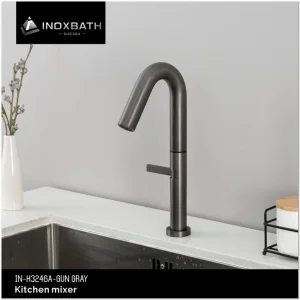
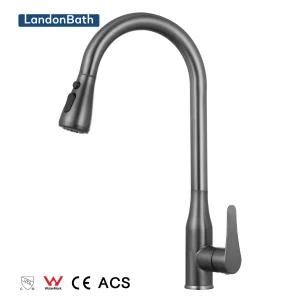
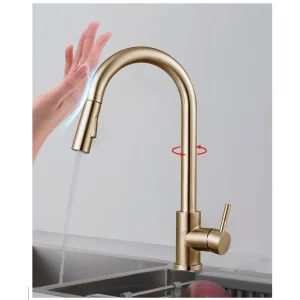
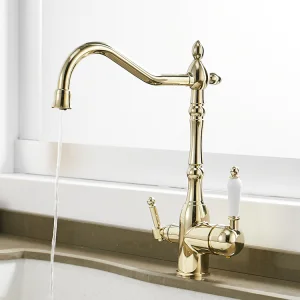
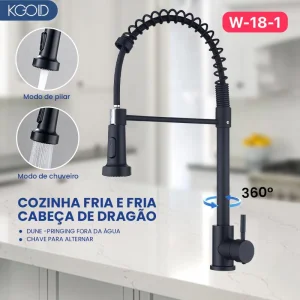
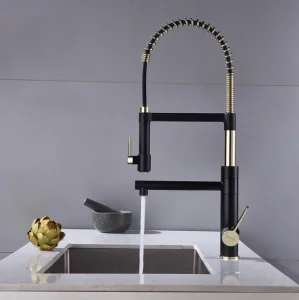
Engineered for commercial-grade resilience and luxury residential interfaces. Explore our primary export portfolio.
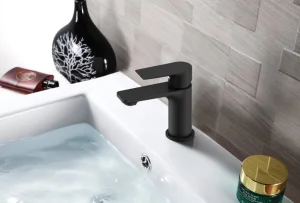
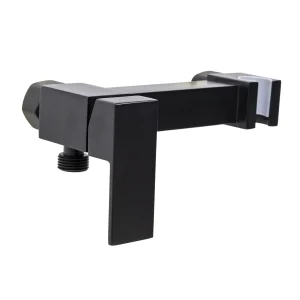
In modern industrial and commercial sanitary architecture, the dual function faucet has evolved from a luxury feature into a regulatory and functional standard. As water scarcity drives tighter conservation mandates worldwide, global builders, hospitality giants, and industrial developers demand systems that merge high performance with micro-management of fluid kinetics. These components are expected to deliver multi-mode water delivery—such as high-pressure aerated stream and standard laminar flow—within a single monolithic structure.
The transition toward smart cities and green buildings (certified by standards such as LEED, BREEAM, and WELL) has pressured architectural specifiers to source dual-function hardware. Whether integrating direct micro-filtration bypass lines or smart infra-red sensor technology, the requirements for interior design components are increasingly rigorous. Manufacturers must satisfy both mechanical durability (minimum 500,000 cycle testing) and chemical safety standards, including NSF/ANSI 372 for lead-free compliance and regional certifications like Australia’s WaterMark, the United States' cUPC, and the European Union’s CE.
By localizing raw materials extraction and streamlining injection molding operations, manufacturing costs are reduced while sustaining high mechanical tolerances.
Utilizing high-end computational fluid dynamics (CFD) modeling to engineer turbulence-free waterways and noise-reducing valve mechanisms.
Ensuring compliance with international standards, delivering lead-free alloys and polymer structures certified for potability and structural durability.
China's dominance in the sanitary ware manufacturing sector is not merely a matter of scale; it is an infrastructure-driven advantage. Cities like Jiangmen, located within the Pearl River Delta industrial cluster, contain decentralized, vertical supply chains. A single district houses copper refining plants, electroplating centers, gravity casting workshops, and specialized packaging manufacturers. This geographical concentration allows for rapid turnaround on prototype iterations and significantly minimizes logistical friction.
Furthermore, the domestic integration of manufacturing technologies—from CNC machining centers to automatic polishing and advanced PVD (Physical Vapor Deposition) finish chambers—enables Chinese factories to maintain a lower cost-of-quality. In high-precision items like dual-function pull-out sprays, maintaining consistent tolerances is vital. High-end Chinese manufacturers execute micro-tolerances down to ±0.01mm on valve seats and cartridge housings, minimizing risk of long-term failure and water-hammer effects in commercial settings.
Founded in 2005, Jiangmen Zhishang Sanitary Ware Co., Ltd. has developed into a professional manufacturer of high-caliber shower accessories, multi-function faucet components, and complete shower systems. Operating across 20 years of dynamic market growth, our enterprise excels at engineering high-performance hardware designed for global deployment.
We specialized in the complete product life cycle—specifically targeting the production of precision nozzles, top sprays, side sprays, shower interfaces, and sealing pieces. Recognizing that custom fabrication is the cornerstone of sustainable OEM/ODM partnerships, we have built a dedicated, in-house tooling and mold division. This enables us to turn client blueprints into operational molds with minimal lead times, securing our competitive edge in a demanding market.
Continuous R&D Commitment: Our in-house mold team and injection molding infrastructure form the foundation of our engineering consistency, providing reliable quality assurance for our global buyers.
Dual-function faucets are engineered to adapt to distinct operational environments. Their designs must meet localized plumbing codes, user expectations, and space constraints:
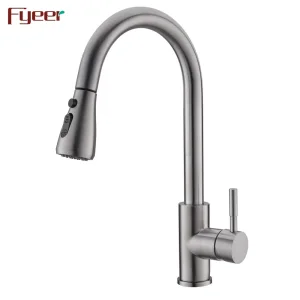
Scenario: High-volume commercial kitchens require swift transitions between filling deep pots (laminar stream) and stripping grease from plates (high-velocity spray).
Engineering requirement: Heavy-duty SUS304 stainless steel or dezincification-resistant (DZR) brass construction. High-flow ceramic cartridges (e.g., Kerox or Sedal) coupled with a reinforced double-interlock metal hose to resist structural fatigue under high heat and pressure.
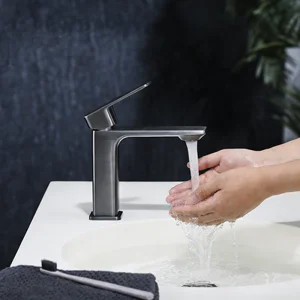
Scenario: Modern minimalist residences favor space-saving, multi-mode taps that feature a clean aesthetic while delivering soft, bubble-stream water for washing and a high-velocity flow for cleaning the basin.
Engineering requirement: Integration of hidden pull-out mechanisms and multi-chamber aerators (e.g., Neoperl) with PVD anti-fingerprint coatings (matte black, brushed gold, or gunmetal grey) for long-term finish integrity.
Scenario: Airports, malls, and public facilities focus on absolute water preservation and contact-free hygiene to prevent cross-contamination.
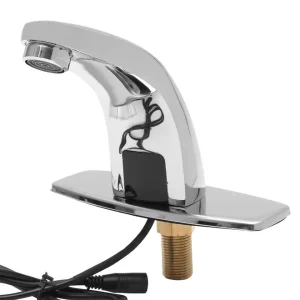
Engineering requirement: Touchless infrared sensor control coupled with manual mechanical bypass. Battery-powered and AC-switched control boxes featuring water-resistant IP65 solenoid valves designed to minimize maintenance overhead.
Scenario: Clinical wash stations and specialized care units require localized, highly directional sprays (such as medical bidets and hand-held sprayers) to maintain precise hygiene control.
Engineering requirement: Medical-grade polymers inside the nozzle assembly, anti-siphoning vacuum breakers, and precision trigger switches to prevent backflow and cross-connection with potable municipal water.
| Material Class | Primary Application | Corrosion Resistance (Salt Spray Test) | Standard Compliance |
|---|---|---|---|
| DZR Brass (H59-1 / H62) | Premium Basin & Kitchen Mixers | 24-Hour Acid Salt Spray (AASS) > Rating 9 | NSF/ANSI 61, California AB1953 (Lead Free) |
| SUS304 Stainless Steel | Commercial Kitchen & Heavy Duty Industrial | 48-Hour Neutral Salt Spray (NSS) > Rating 9.5 | WaterMark Listed, EN 817 |
| Engineering ABS (Chromed) | Pull-Out Spray Heads & Shower Nozzles | Not Applicable (Non-Corrosive Polymer) | REACH, RoHS Compliance |
The sanitary manufacturing sector is experiencing rapid technological evolution, driven by the integration of automation and smart materials:
To mitigate risk and secure reliable inventory, global procurement managers should follow this evaluation checklist when auditing Chinese faucet factories:
Technical and regulatory insights on sourcing, manufacturing, and shipping dual-function faucet systems globally.
Discover our custom-engineered mixers, pull-down variants, and touchless automatic models built for global buyers.
 Zhishang Sanitary Ware