Explore high-durability, water-efficient brass and stainless steel plumbing fittings selected for global commercial engineering applications.
In modern industrial and commercial construction projects, water resource management has progressed from a baseline functional necessity to a core metric of environmental compliance and architectural sustainability. Time delay faucets (also structurally categorized as self-closing or non-concussive valves) sit at the critical intersection of fluid mechanics, public health, and mechanical engineering. These components are strategically designed to deliver a precise volume of water over a predetermined cycle length—typically between 5 to 20 seconds—mitigating water waste from negligence while eliminating structural risks associated with manual water valves left in an open configuration.
From an operational cost perspective, public buildings, high-traffic transportation terminals, correctional institutions, and educational facilities suffer excessive operational overhead when standard manual plumbing systems are deployed. Incorporating time-delay components can decrease standard commercial water consumption figures by 45% to 65%. This whitepaper serves to outline the micro-technological capabilities, regulatory parameters, and global manufacturing benchmarks required by architectural engineers and procurement managers seeking leading OEM/ODM solutions.
"Optimizing time-delay sanitary ware requires a thorough alignment of material sciences with mechanical tolerances. For commercial applications, selecting components that resist heavy mineral calcification and withstand over 500,000 operations without mechanical deformation is crucial to achieving high return on investment (ROI)."
Unlike standard mechanical valves that utilize a manual stem thread to control the physical flow channel, a self-closing time delay faucet relies on mechanical pressure differentials. When the push button is depressed, a compression spring is contracted, displacing a internal piston. This action expels water from a primary control chamber. As the button is released, water begins to trickle back into this internal chamber through a microscopic, calibrated path (referred to as a bleed hole). The rate at which water replenishes this internal chamber controls the mechanical timing loop. Once the control chamber is filled, the pressure balance is restored, pushing the main elastomeric diaphragm or sealing gasket back onto the valve seat to seal the flow channel.
Engineered variations in timing are achieved via mechanical adjustments within the cartridge assembly. High-end cartridges utilize a dynamic calibration needle to widen or narrow the return channel. Industrial-grade solutions utilize synthetic gemstones or ultra-smooth sapphire nozzles at the bleed hole to prevent mineral scale (calcium carbonate) from obstructing the water path, which represents the single most common cause of premature cartridge failure in commercial environments.
Founded in 2005, Jiangmen Zhishang Sanitary Ware Co., Ltd. has established a formidable presence in the high-precision plumbing manufacturing sector. Leveraging over two decades of technical evolution, the enterprise has grown into a large-scale manufacturer of high-quality shower accessories, precise nozzles, top and side sprayers, shower interfaces, and high-performance sealing components.
To maintain a competitive edge in rapidly evolving international markets, the company has deployed a specialized, in-house mold engineering division. By using advanced mold flow simulation and continuous R&D protocols, Zhishang guarantees the structural integrity and precision tolerances required for time-delay cartridges and high-performance flow regulation components. Equipped with over 30 advanced injection molding machines, the 10,000-square-meter facility executes raw material processing, precision molding, ultrasonic welding, and rigorous hydraulic sealing assessments under strict ISO-9001 standards.
How global procurement networks rank and select the top time-delay faucet factories. The key metrics that define industry leaders.
Top factories utilize Lead-Free DZR (Dezincification Resistant) Brass meeting CW617N or HPb59-1 specifications. The chemical purity of the raw copper determines resistance to stress-corrosion cracking and compliance with stringent drinking water regulations.
Elite manufacturers subject their self-closing cartridges to life-cycle tests exceeding 500,000 mechanical operations under high-temperature and high-pressure configurations, certifying stability under harsh municipal water fluctuations.
Global operations require compliance with local regulations. Validated exporters maintain CE, WRAS (UK), cUPC (US/Canada), WaterSense, and EN 816 (European standard for self-closing valves) certifications.
Advanced tooling, multi-axis CNC milling, and high-performance injection molding machines (such as the fleet of 30+ units at Jiangmen Zhishang) are essential to prevent structural micro-fractures in high-wear plastic and rubber parts.
Leading suppliers integrate dynamic constant-flow regulators (AERATORS) that limit flow rates to 1.9 L/min (0.5 GPM) regardless of input municipal pressure fluctuations, aiding in LEED credits.
The requirements for time-delay systems vary significantly across localized applications and geographic settings. In high-traffic transit hubs, such as international airports and mass transit systems, water-conservation systems must be equipped with anti-block mechanisms. This prevents vandals from locking the push button in the active position to cause flooding. In this scenario, the valve is engineered to shut off after the configured timing loop, even if the manual button remains depressed.
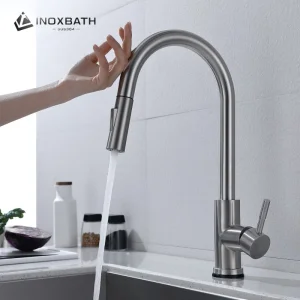
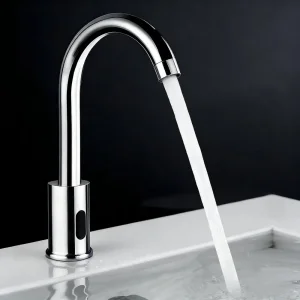
In municipal school systems and university campuses, thermal safety is a critical design factor. Pre-mixing valves are integrated into time delay fixtures to deliver temperate water (typically calibrated between 35°C to 38°C), preventing thermal shock and scalding in children. For medical centers and pharmaceutical facilities, hygienic concerns are paramount. In these environments, foot-pedal actuated time-delay valves or touchless sensor-activated designs are specified to reduce the risk of cross-contamination.
The global demand for self-closing sanitary fixtures is driven by strict water-efficiency regulations. In North America, the ASME A112.18.1 and CSA B125.1 standards dictate plumbing design parameters, requiring strict flow regulators and lead-free metal compositions. In Europe, the EN 816 standard serves as the framework for non-concussive valves, classifying devices into multiple acoustic groups based on the level of operational noise generated within municipal pipelines.
Concurrently, Asia-Pacific represents the fastest-growing region for manufacturing and infrastructure deployment. The manufacturing clusters in Jiangmen and Kaiping (Guangdong Province) lead the global supply chain. They export precision components to brands in North America, Europe, and the Middle East, leveraging localized supply chains and raw material ecosystems.
The next generation of time delay systems is transitioning from purely mechanical operations to hybrid electronic platforms. By using integrated micro-turbines, the kinetic energy of water flow is harvested to power low-energy sensor systems, eliminating the need for external electrical connections or replacement batteries. Additionally, modern industrial designs feature anti-lime magnetic cores within the control cartridge to attract mineral particles, preventing micro-clogging and reducing field maintenance calls by up to 80%.
Critical engineering answers for plumbing engineers, commercial contractors, and international sourcing directors.
Mechanical time-delay faucets operate entirely on hydraulic pressure differential and spring mechanics, requiring no external electricity or batteries. This makes them highly reliable for budget-sensitive projects or remote sites. Electronic sensor faucets require power, solenoid valves, and infrared sensors, which offer touchless convenience but demand higher maintenance and battery replacement cycles.
Most industrial time-delay faucets are calibrated at the factory to run for 10, 15, or 20 seconds. However, premium models feature adjustable cartridge units. By removing the push-button shroud, a technician can adjust a micro-screw or dynamic needle valve, regulating the water intake rate into the internal pressure chamber and altering the timing cycle.
Hard water with high concentrations of calcium and magnesium carbonate is the primary cause of cartridge failures. Fine sediment can clog the microscopic bleed hole in the cartridge piston, causing the valve to run continuously or fail to activate. Sourcing models with integrated stainless steel mesh pre-filters and ruby/sapphire orifices minimizes these failure modes.
DZR Brass prevents the leaching of zinc from the copper-alloy matrix in aggressive water environments. In many jurisdictions (such as the UK and parts of Western Europe), standard brass is restricted due to risk of dezincification, which compromises structural integrity. Leading exporters use certified lead-free DZR brass to ensure long-term mechanical safety and regulatory compliance.
Yes. Most commercial manufacturers align their fittings with international standards. Wall-mounted and deck-mounted configurations typically feature G1/2" or NPT 1/2" threaded connections, allowing for direct replacement of manual faucets without modifying structural plumbing systems.
With an in-house tooling division, over 30 advanced injection molding machines, and 20 years of manufacturing experience, Jiangmen Zhishang handles the entire development cycle. This includes 3D CAD modeling, mold flow analysis, tool fabrication, high-speed injection molding, and mechanical testing, ensuring rapid prototyping and consistent quality.
Explore our extended catalog of touchless sensors, double-hole mixers, high-grade polymers, and solid brass commercial fittings.

 Zhishang Sanitary Ware