Explore our elite collection of engineering-grade brass and stainless steel water control systems designed for durability, style, and touch-free/push-button performance.
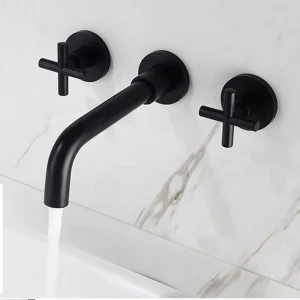
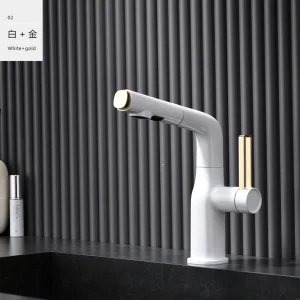
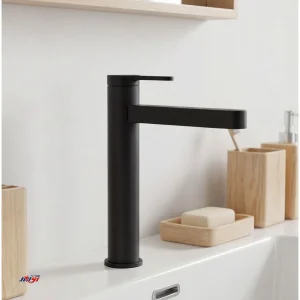
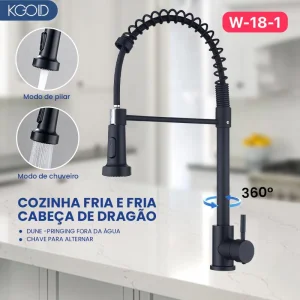
Since 2005, pioneering the manufacturing of high-performance shower systems, mechanical push valves, and precision-engineered sanitary components.
Originally established in Jiangmen, the heartland of China's plumbing hardware industry, Jiangmen Zhishang Sanitary Ware Co., Ltd. has evolved into a global titan. We specialize in the development and large-scale manufacturing of high-durability nozzles, top sprays, side sprays, shower interfaces, and critical sealing components. Armed with a state-of-the-art mold-making division and highly specialized injection molding departments, we provide premium OEM and ODM solutions to international buyers requiring exact compliance with local safety and performance regulations.
In modern commercial construction, high-traffic facility management, and multi-family residential planning, the selection of plumbing fixtures is no longer merely an aesthetic consideration. It is a critical operational decision affecting water consumption, operational longevity, maintenance budgets, and sanitary standards. The transition from traditional manual rotary or single-lever handles to tactile push-button faucets (also referred to as mechanical metered or self-closing faucets) represents a massive leap forward in sanitary engineering.
Traditional lever-action faucets rely on user intervention to terminate the flow of water. In public restrooms, commercial kitchens, school facilities, and medical offices, users frequently leave water running, leading to millions of gallons of wasted water annually. Push-button control mechanisms solve this issue natively. By utilizing a internal hydraulic delay cartridge or pneumatic piston assembly, pushing the button activates a preset volumetric flow that automatically terminates after a specific period (typically ranging between 5 to 15 seconds depending on local green building guidelines, such as LEED or BREEAM).
At Jiangmen Zhishang Sanitary Ware Co., Ltd., we combine this mechanical utility with advanced materials. By leveraging our 30+ injection molding machines and custom mold division, we produce internal cartridge sleeves and sealing interfaces that endure over 500,000 activation cycles without calibration drift, ensuring that property developers minimize maintenance overhead while achieving water conservation targets.
For international importers, plumbing distributors, and large-scale EPC (Engineering, Procurement, and Construction) contractors, sourcing push button faucets from China requires a rigorous vetting process. A failure in a high-rise project or hospitality development can result in devastating water damage costs, regulatory penalties, and brand erosion. When sourcing from push-button faucet suppliers, key technical requirements must be verified:
Premium fixtures must utilize Lead-Free brass (e.g., HPb59-1 or CW617N brass alloys) or high-grade SUS304/SUS316 stainless steel to comply with global drinking water regulations. Inferior suppliers often substitute leaded brass alloys or 201-grade stainless steel in internal water-way channels, leading to rapid pitting corrosion, heavy-metal leaching, and structural failure. Make sure your supplier provides materials certified to NSF/ANSI 372 (low lead content) and local regulatory standards.
The valve cartridge is the heart of the push-button faucet. Hydraulic delay systems must feature silicone or EPDM sealing rings that maintain elasticity in variable water temperatures (from cold water supply up to 80°C hot water lines). Our sealing interfaces and engineering polymers are tested extensively to resist limescale buildup, mineral deposits, and debris standard in global municipal water infrastructure.
Different jurisdictions mandate strict maximum flow rates. For instance, the EPA WaterSense program in the United States requires private lavatory faucets to have a flow rate of no more than 1.5 GPM (gallons per minute), while public faucets often must not exceed 0.5 GPM. Excellent suppliers will incorporate specialized aerators (such as Neoperl pressure-compensating aerators) that deliver a steady, non-splashing spray while dramatically reducing total volumetric throughput.
To assist procurement managers in choosing the correct mechanism for their specific projects, the following engineering matrix outlines the technical trade-offs between mechanical push-button, infrared touchless sensor, and manual lever systems.
| Performance Metric | Mechanical Push-Button | Infrared Motion Sensor | Standard Manual Lever |
|---|---|---|---|
| Power Source Required | None (Purely Hydraulic/Piston) | Battery (AA/Lithium) or AC Mains | None (Manual Force) |
| Water Conservation Level | High (Auto-Shutoff at 5-15 sec) | Ultra-High (Instant-off upon exit) | Variable (Dependent on User) |
| Initial Capital Outlay | Moderate | High | Low |
| Maintenance Profile | Low (Simple Cartridge Replacement) | High (Solenoid & Battery Swap) | Minimal (Cartridge Wear Only) |
| Vandal Resistance | Excellent (All-metal heavy structures) | Moderate (Sensor lenses can scratch) | Low (Levers easily broken/damaged) |
How our in-house engineering and mold fabrication team translates design blueprints into global-market-ready sanitary hardware.
Our dedicated mold team designs custom tooling with tighter tolerances (up to ±0.01mm). This ensures flawless execution of complex fluid channels within the faucet body and shower accessories, preventing internal turbulence and drop-off in pressure.
With 30 state-of-the-art injection molding machines, we possess the scale to manufacture polymer components, decorative covers, and internal structural spacers. This vertically integrated manufacturing guarantees cost efficiency and batch consistency.
We work in strict alignment with WRAS, CE, ACS, Watermark, and UPC standards. Our QC division conducts hydraulic testing on 100% of finished valves before packaging, protecting your brand from field failures.
The sanitaryware industry is undergoing a digital and mechanical transformation driven by global climate action and rising operational overheads. The next generation of push-button and metered valves focuses on three core pillars:
Future iterations of the push-button faucet are integrating tiny piezo-electric generators inside the flow channel. Pushing the button mechanical opens the valve, and the water flow itself generates a current that powers a small microchip. This allows the faucet to dynamically adjust flow timers based on usage patterns, or transmit diagnostic flow data to building management platforms without requiring external batteries or AC connections.
Post-pandemic commercial environments require high hygiene. Modern push-button actuators are processed with specialized PVD (Physical Vapor Deposition) coatings or integrated with silver-ion antimicrobial coatings. This suppresses bacteria cultivation on the actual push surface, keeping the fixture sanitary between cleaning cycles.
To reduce facility maintenance downtimes, developers are demanding modular cartridge systems. Instead of shutting off the main water line and dismantling the entire faucet body, the new design allows maintenance personnel to swap out the internal timer and valve cartridge from the top of the faucet deck in under 60 seconds with standard tools.
Answering the critical engineering, quality control, and supply chain questions that professionals ask before securing a long-term contract.
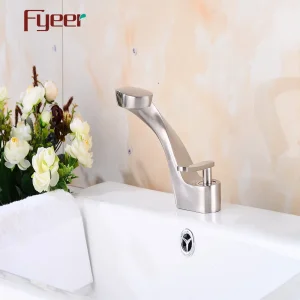
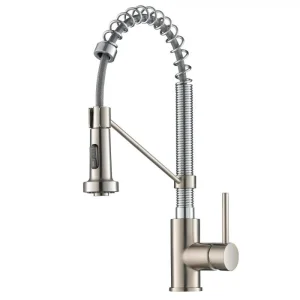
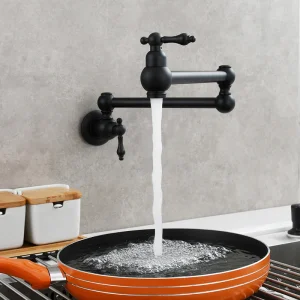
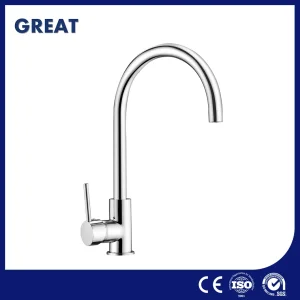
Our industrial collection engineered for commercial cafeterias, public infrastructure, and heavy-duty utility applications.
 Zhishang Sanitary Ware